Your marketing is working. Traffic is climbing. Yet somehow, revenue isn't keeping pace. Before you blame your ads or your pricing, look at the machinery running underneath your store. More often than not, the real culprit hides in your ecommerce tech stack.
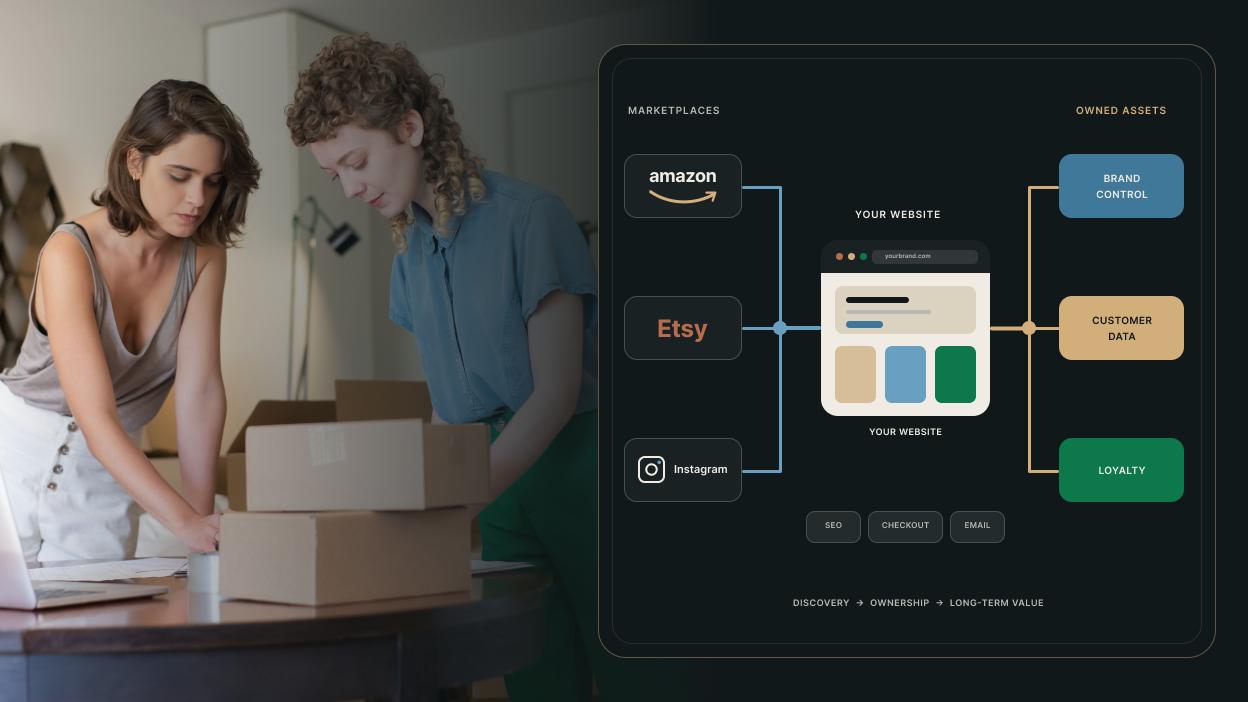
Your ecommerce tech stack is the collection of tools, platforms, and code that powers your online store, from your storefront and checkout to your inventory system and integrations. When these pieces work in harmony, sales flow smoothly. When they don't, you leak revenue in ways you rarely see on a dashboard.
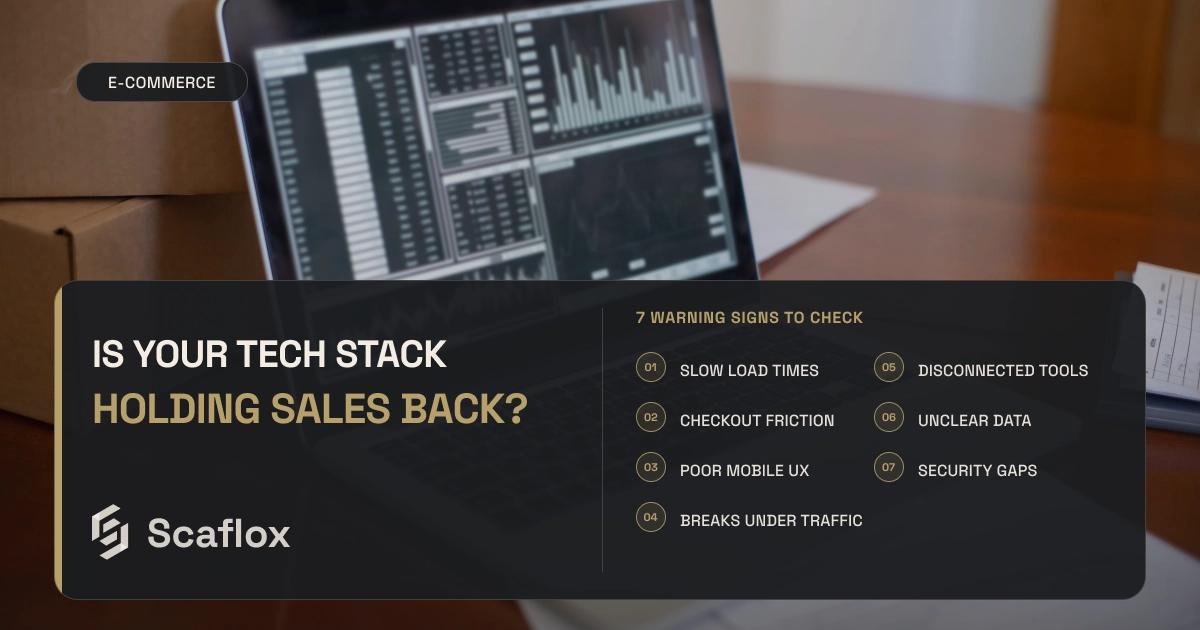
In the next few minutes, you'll learn seven clear warning signs that your setup is quietly costing you customers. Here's what we'll cover:
- Slow load times and their impact on conversions
- Checkout friction that drives buyers away
- Poor mobile experiences
- Fragile systems that break under growth
- Disconnected tools and manual busywork
- Weak data visibility
- Security and reliability gaps
Let's dig in.
Sign 1: Your Store Loads Slowly
Speed sells. Every extra second a page takes to load chips away at your conversion rate. Shoppers won't wait. They bounce, and your ad spend goes with them.
Why does this happen? Bloated code, unoptimized images, too many third-party scripts, and cheap hosting all pile on.
The business impact: You pay to bring visitors in, then lose them before they ever see your products. That's money burned twice.
Try this quick check: run your homepage and a product page through a free speed test. If load times feel sluggish, your stack needs attention.
Sign 2: Your Checkout Has Too Much Friction
Getting a shopper to the cart is hard work. Losing them at checkout is heartbreaking. Yet clunky checkouts are one of the biggest silent killers of ecommerce sales.
Think about the last time you abandoned a purchase. Maybe the form was too long. Maybe it forced you to create an account. Maybe your preferred payment option wasn't there. Each of these is a friction point, and each one sends buyers running.
The business impact: Baymard Institute has tracked cart abandonment across 50 studies and reports an average rate of 70.22%. A big slice of that comes from a checkout that asks too much. Their research also found that 18% of shoppers abandon because a site required account creation, and 17% leave due to a checkout process that feels too long or complicated. Every removed step is money recovered.
Watch for these red flags:
- Mandatory account creation before purchase
- Limited payment methods
- No visible progress or trust signals
- Forms that don't auto-fill or validate in real time
Sign 3: Your Mobile Experience Feels Like an Afterthought
A large and growing share of ecommerce traffic comes from phones. If your store looks great on a desktop but wobbles on mobile, you're turning away a significant portion of your audience.
A mobile-first experience isn't just about shrinking your desktop site. Buttons need to be thumb-friendly. Images should load fast on a spotty connection. Checkout must work in a few taps, not a dozen.
The business impact: When phone shoppers struggle, they don't email support. They leave and buy elsewhere. You lose the sale and the customer.
Pull up your store on your own phone. If you find yourself pinching, zooming, or squinting, your customers are too.
Sign 4: Your Site Breaks During Traffic Spikes
Picture your best day: a flash sale, a viral post, or a holiday rush. Now picture your site crashing at the exact moment demand peaks. That nightmare is real for stores built on shaky foundations.
Systems that can't scale buckle under pressure. Pages time out, carts fail, and customers lose trust. Worse, you may never know how many sales you missed because the store simply wasn't there to take them.
The business impact: A single hour of downtime during a promotion can wipe out weeks of marketing effort. Reliability during your busiest moments is where growth happens or dies.
If you feel nervous every time traffic climbs, your architecture isn't ready for scale.
Sign 5: Your Tools Don't Talk to Each Other
Most stores run on a patchwork of apps, with inventory here, email there, and accounting somewhere else. When these tools don't connect, you and your team become the glue, copying data by hand and fixing errors after the fact.
This disconnection creates two problems. First, it eats your time. Second, it introduces mistakes: overselling stock, mispricing items, or shipping the wrong order.
The business impact: Manual work doesn't just slow you down. It caps how far you can grow without hiring more people. Every hour spent patching systems is an hour not spent growing sales.
Ask yourself: how many spreadsheets keep your business running? If the answer makes you cringe, your stack needs proper integration.
Sign 6: You Can't See Clear Data
You can't fix what you can't measure. If your reporting is scattered across platforms or simply missing, you're steering your business blind.
Good data tells you which products sell, where customers drop off, and which channels actually pay off. Without it, you guess. And guessing is expensive.
The business impact: Poor visibility leads to poor decisions, including overspending on weak channels, understocking your winners, and missing the small tweaks that lift revenue.
A healthy stack gives you one clear view of what's working. If you're stitching reports together manually, you're missing the full picture.
Sign 7: Security and Reliability Keep You Up at Night
Trust is the currency of ecommerce. A single security scare, such as leaked data, a payment glitch, or a suspicious warning in the browser, can end a customer relationship on the spot.
Outdated software, weak security practices, and unreliable infrastructure put both your customers and your reputation at risk. And once trust is broken, it rarely comes back.
The business impact: Beyond the direct cost of a breach, you face lost sales, damage to your brand, and possible compliance penalties. Reliability isn't a luxury; it's the price of doing business online.
If you're unsure whether your store meets current security standards, that uncertainty itself is a warning sign.
Turning Warning Signs Into Growth
Here's the encouraging part: every sign on this list is fixable. Slow pages get faster. Clunky checkouts get streamlined. Fragile systems get rebuilt to scale. The stores winning today aren't lucky. They simply invested in engineering that removes friction and supports growth.
If you recognized even two or three of these signs in your own business, your ecommerce tech stack is likely leaving money on the table. The good news is that the fix often pays for itself through recovered sales.
That's exactly where Scaflox comes in. We're a product engineering team that builds and rebuilds ecommerce platforms to be fast, reliable, and ready to scale. We turn the leaks in your stack into steady, growing revenue, without the technical headaches landing on your plate.
Ready to find out what your ecommerce tech stack is costing you? Book a free consultation with Scaflox, and we'll walk you through the biggest opportunities hiding in your store.
Which of these seven signs feels most familiar in your business right now? Start there. It's often the fastest path to more sales.